Chief executive Tom Mockridge says first infrastructure expansion in 15 years is overdue as company reveals it has passed the 5 million cable customer mark
Virgin Media’s planned £3bn investment to extend its cable network to an extra 4m homes shows the company’s focus is on infrastructure rather than content, according to its chief executive, Tom Mockridge.
The cable company’s first big infrastructure expansion for 15 years was overdue, said Mockridge, and could not have happened before it was acquired by John Malone’s Liberty Global in 2013.
Liberty reported record revenues of more than $18bn (£11.7bn) on Thursday in the US and Virgin subsequently unveiled its results on Friday morning, which showed it passed the landmark of 5 million cable customers and revealed its huge network expansion programme – Project Lightning.
Mockridge declined to comment on speculation about Liberty Global being interested in bidding for ITV, almost a decade on from the doomed bid by NTL (the cable company that later merged with Telewest to form Virgin Media) for the broadcaster.
Related: Virgin Media challenges BT with cable network extension plan
However, he pointed out that “the message from [Friday’s Project Lightning] announcement” was that the focus for Virgin is on putting its money into infrastructure and its “core business”.
Virgin Media’s figures showed its revenue increased 3% to £4.2bn in the year to 31 December 2014, with operating profit up 41%, mostly due to revenue growth and economies of scale following its purchase by Liberty.
Cable subscription revenue grew 3% in 2014 and the quad-play company’s mobile revenue was also up, by 9%, while churn rate – the number of customers not renewing their subscriptions – reached a record low of 14.6%.
Mockridge put the fall in customers leaving down to better customer service and a more effective network, which people value more as they watch more video via broadband: “The fundamental reason is people use their broadband services so much more. The use in our network is running up 60% on last year.”
Average monthly revenue per user also rose, to £49.36 in the fourth quarter of 2014. While some could be attributed to price rises, the company also sold more products across its quad-play offering of telephony, broadband, mobile and television services.
Following its intervention into the Premier League auction rights process – asking Ofcom to investigate if the Premier League auction process which resulted last week in Sky and BT paying a record £5.1bn for rights to live top-flight football is fair for consumers – Mockridge said it was now “up to the referee” to decide.
The former News International chief executive said Virgin awaits the outcome but he said it was “helpful” that Sky – which provides its sports channels to the cable operator on a wholesale basis – had recently indicated it was going to absorb some of the rise in rights costs.
Related: Virgin Media urges Ofcom to pause auction of Premier League live TV rights
Over a year ago, Mockridge said Virgin Media was holding talks with Amazon about putting its video-on-demand service, Prime Video, on its network, but he told the Guardian that there is still no outcome.
The Project Lightning strategy – also called the UK Network Extension – has received support from the government, with David Cameron saying: “This additional private investment will create more opportunities for people and businesses, further boosting our digital economy.”
But Mockridge said that while all the investment in Project Lightning comes from the private sector, “where the government has been supportive”, it has been in terms of infrastructure policy as Virgin still has to “dig a hole in the ground” to extend its cable network.
However, terms and conditions do apply. Virgin’s results have a caveat about the £3bn investment which says: “Depending on a variety of factors, including the financial and operational results of the earlier phases of the programme, the UK Network Extension may be modified or cancelled at our discretion.”
The Virgin Media chief said that trials in Teesside and Glasgow showed that up to 23% of homes took up the service, but “we’ve got to be better than that”. While Liberty’s approval for the investment in the five-year expansion programme showed its belief in Virgin’s strategy, Mockridge said it was right there were terms and conditions, “the boss is saying we’ve got to deliver”.
The company is asking householders who want to take advantage of its services to register their interest at virginmedia.com/cablemystreet in order to see where it is best placed to invest in first.
• To contact the MediaGuardian news desk email editor@mediaguardian.co.uk or phone 020 3353 3857. For all other inquiries please call the main Guardian switchboard on 020 3353 2000. If you are writing a comment for publication, please mark clearly “for publication”.
• To get the latest media news to your desktop or mobile, follow MediaGuardian onTwitter and Facebook.
Additional login step brings extra layer of protection against hackers for Apple’s messaging and video chat, but more can be can be done say experts
Apple is finally enabling two-step authentication to help protect users of its iMessages and FaceTime on iPhone, iPad and Mac computers.
Related: How Google, Facebook and Hotmail aim to stop holiday hacking
The security feature adds an extra layer of protection against hackers trying to access users’ accounts. After logging in with their usual name and password, two-factor asks account holders to use a second security code to verify their messaging and video chat accounts.
The login protection was added to Apple’s iTunes and iCloud accounts in March 2013, meaning Apple users who have perviously logged into a Mac, iPhone or iPad with their Apple ID were already protected by the extra security.
Related: Twitter introduces 'two-factor authentication' to stop password hacking
Now the same service has been activated for two more of Apple’s services, meaning that if users log out of their FaceTime or iMessage accounts and attempt to log in again, or log in on another machine, they will require a security code to confirm their username and password.
“It’s really great to see Apple extending its two-step authentication to cover more services, particularly person-to-person communication services such as these, which have been so widely abused in the past (Facebook, Skype etc),” said Rik Ferguson, vice president of security research at Trend Micro.
Two-step authentication means that even if an attacker has the username and password for the account they cannot access it without the extra code. While the extra security is welcome Ferguson said more can be done to secure user accounts.
“Two-step authentication, such as a message to a mobile device, is still not the same as fully-fledged two-factor authentication. Multi-factor authentication typically relies on something that you know (a password) in addition to either something you have (eg. a swipe card), or something that you are (a fingerprint),” said Ferguson.
Banks have been using card readers or numeric key fobs with security codes for years. But for internet sites and services, including Facebook, Twitter and Google, the second step is either a code-generating smartphone app or a text message with a code send to the phone number registered to the account.
“Two-step authentication is simply two sets of something that you know,” said Ferguson. “The ability to enter to enter the SMS-based password doesn’t depend on your ownership of the smartphone, only your access to the text message. If attackers can divert the calls or messages of that device, for example by calling the mobile service provider, this two-step authentication can and has already been subverted.”
Related: What to do if your email gets hacked - and how to prevent it
Apple’s two-step implementation uses codes sent via text message to a registered phone or the company’s Find My iPhone app. More than one phone number can also be associated to the account just in case one of them is lost or stolen.
A recovery key that is intended to be kept safe for emergencies can also be used to log into the account in place of a security code.
Law that allows blockade of offending sites without a court order criticised by free-speech groups as circumventing judicial power
France has introduced a new law that allows government agencies to order the blocking of websites that advocate acts of terrorism or contain images of child abuse.
The legislation was brought in by revisions to 2011’s Loppsi Act, and an anti-terror bill passed by the French senate in October, but can now be used by the general directorate of the police’s cybercrime unit to force French internet service providers to block sites within 24 hours, without a court order.
Sites that are blocked will redirect to a page from the interior ministry describing why the action was taken. The sites will be checked quarterly to make sure they continue to display the proscribed content and that the block is still appropriate.
Related: France boosts anti-terror measures in wake of Paris attacks
Costs incurred by the ISPs as part of the block can be recovered from the French government, while sites can appeal if they have sufficient grounds to do so.
The bill was criticised by Felix Tréguer, founding member of La Quadrature du Net free-speech group : “With this decree establishing the administrative censorship for internet content, France once again circumvents the judicial power, betraying the separation of powers in limiting what is the first freedom of all in a democracy – freedom of speech.”
Tréguer said: “Website blocking is ineffective since it is easily circumvented. It is also disproportionate because of the risk of over-blocking perfectly lawful content.”
Related: Internet filters block websites of sex abuse charities
The UK also blocks sites for similar reasons, under an agreement between ISPs and government based upon the system used to keep child abuse material off the web.
Media companies can also force the closure of sites that infringe on their copyright via ISPs in the UK, but only through the use of court orders. Similar moves in the Netherlands, including that of the notorious torrent site the Pirate Bay, were ruled as ineffective by a Dutch court.
Over the past decade, technology has impacted all areas of our lives. We look at developments in digital romance and question whether the future of love is virtual
In Her, a film arguably about the future of relationships, Joaquin Phoenix portrays a lonely, alienated and heartbroken man who reverts to technology to fulfil his romantic and sexual needs. The technology in question is an artificial intelligence (AI) algorithm (the voiceover by Scarlett Johansson) whose only weakness is the inability to avoid falling in love with her client. Though technically unfeasible by today’s AI standards, the broad premise of the movie is more realistic than most people may think. Indeed, in the past 10 years our lives have been transformed by technology and love is no exception. With Valentine’s Day around the corner, there’s no better time to examine some of the recent developments in this area.
Taobao, China’s version of Amazon, offers virtual girlfriends and boyfriends for around $2 (£1.20) per day. These are real humans, but they only relate with their paying customers via the phone – calls or text – in order to perform fairly unromantic tasks such as wake up calls, good night calls, and (perhaps the most useful service) “sympathetically listen to clients’ complaints”. If this is all you expect from a relationship, it at least comes at a cheap price.
Similar services already exist in India, where biwihotohaisi.com helps bachelors “practice” for married life with a virtual wife, and Japan, where “romance simulation games” are popular with men and women, even when they feature animated avatars rather than human partners.
Invisible Boyfriend
A new US app, Invisible Boyfriend, allows users to customise the looks, personality and interests of an imaginary male partner and pay $25 (£16) for his virtual company. Particularly appealing is the app’s ability to recreate a real-looking remote boyfriend via hyper-realistic texts, pictures and interactions. This is the closest to having a real boyfriend who is just physically absent, hence the name of the app.
Another site, 98rock.com, which comes up as top hit if you google virtual girlfriend, attempts to offer an interactive soft-porn experience shot from a point of view. Each day the site features a different “babe of the day”– a real physical woman in her underwear sitting on a red sofa – and the option to type a command. It is the digital equivalent of a sex-by-window-display formula popularised in Amsterdam’s red light district. Now, I only tried this on one occasion, so I don’t know if other virtual girlfriends on this site are more cooperative, but the one I got only responded to the “jump” command, ignoring my request for her to “smile”, “talk”, or “sing”, among others.
Virtual communities, such as Second Life, recreate all aspects of the relationship cycle, including pregnancy and birth. In fact, there are now multiple guides on how to have sex in a virtual world, which perhaps suggests that physical skills are not necessarily transferable to our avatars. One salient difference is that most avatars are not equipped with genitals. As an expert notes: “The first thing you need to do, get yourself a penis/vagina. Here’s a piece of advice: Second Life is a visual medium. Hence it does have a certain importance that you choose a penis that actually looks realistic and is in-line with the colour of your skin.” Other suggestions include upgrading looks – because “with the prefab [Second Life] avatar you will find it very difficult to get laid” – and making an effort to role-play a seductive or erotic situation. Indeed, directness and bluntness is as discouraged as in the analogue world.
Tinder
Many of you will find these developments absurd or pathological, but let’s not forget that the contemporary notion of relationships as romantic has not always represented the norm – in fact, love as we define it today is a fairly recent idea. In the times of the cavemen and primitive tribes, women were simply captured. In medieval times, marriages were engineered for pragmatic rather than emotional reasons, as is still the case today in much of the developing world. More recent rituals, such as random drunken encounters at a bar or club, or online dating, are not always driven by love either and hardly qualify as romantic. The impressive success of Tinder is arguably based on its ability to simultaneously cater to our primordial instincts and our postmodern obsession with efficiency.
Still, all forms of cybersex or, if you prefer, cyberlove, are still viewed negatively by most people and the media. In fact, it is quite common to focus on the detrimental aspects of technologically-mediated relationships, as this piece for the Guardian demonstrates. It is also easy to be shocked by the latest manifestations of love-related technologies, even though they are typically just minor variations of previous tools, activities or rituals to which we have clearly habituated already. For instance, phone sex was widely regarded as normal by the time chat forum sex emerged, sms-sex was widely accepted by the time sexting apps like Snapchat came along, and online dating seems rather conventional now that mobile dating and hook-up apps have taken over.
Online pornography is still taboo yet porn is estimated to be a $97bn industry and there are over 4m porn sites in the world. Importantly, most new technologies – not just in the realm of sex and love – transition rather quickly from being merely a niche trend used by early adopters to becoming mainstream. It is estimated that over 30% of Britons are looking for some form of love or sex online. As the futurist William Gibson, who coined the term cyberspace, noted: “The future is already here – it’s just not evenly distributed”.
Finally, it is likely that virtual relationships fulfil the same psychological needs fulfilled by real-world or physical relationships, though the boundaries between these categories are increasingly hard to define. A recent scientific study on Second Life users – conducted in the actual virtual community – found that most residents saw cybersex as a form of “self-therapy, a source of instant pleasures, liberation from social norms, a tool for self-expression, and exploration and novelty”, and that it enabled them to experience “close emotional bonds” and “intense, meaningful, and erotic” feelings. The study also revealed that virtual relationships surpass analogue ones by a three-to-one ratio, not least because they are more likely to enable quick, superficial and ephemeral interactions. This makes Valentine’s Day a more expensive affair online than offline (for a list of Second Life Valentine’s presents, see here).
Tomas Chamorro-Premuzic is a professor of business psychology at University College London and vice-president of research and innovation at Hogan Assessment Systems. He is co-founder of metaprofiling.com and author of Confidence: Overcoming Low Self-Esteem, Insecurity, and Self-Doubt
More like this:
• The Tinder effect: psychology of dating in the technosexual era •Behind the online comments: the psychology of internet trolls
To get weekly news analysis, job alerts and event notifications direct to your inbox, sign up free for Media Network membership.
All Guardian Media Network content is editorially independent except for pieces labelled “Brought to you by” – find out more here.
National Cyber Crime Unit detective says cybercriminals often start out ‘stealing swords and gold’ in online games like World Of Warcraft
People who go on to commit serious cybercrime often start out with minor thefts in online games such as World Of Warcraft, a leading detective has said.
Looking at how people end up on a particular criminal path could help with early intervention, said Dr Jamie Saunders of the National Crime Agency.
In an interview with the Independent, the director of the National Cyber Crime Unit said cybercriminals can do “a great deal of damage, but not in a traditional criminal way”, and explained that the crimes can start out on a small scale.
“There are some sorts of criminality that youngsters don’t think of as serious,” he said. “Stealing gold off each other in online games, cheating if you like. It would be hard to imagine a knock on the door from a policeman because you’ve stolen a sword off your friend in World Of Warcraft.”
World Of Warcraft is an online role-playing game which can feature thousands of players from around the world interacting with each other in a virtual universe.
Saunders said the motivations of those who end up committing theft in such games are often not money, but rather the challenge or an interest in experimenting, and that some of those involved do not always realise what they are doing may be illegal.
“The first point that has come out of this is that it does start with play, stealing swords and gold in online games,” he said.
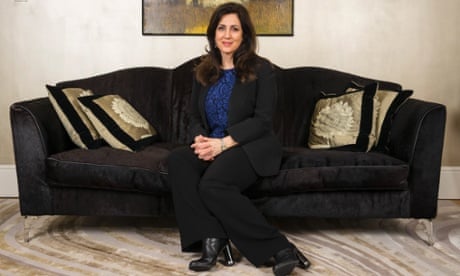
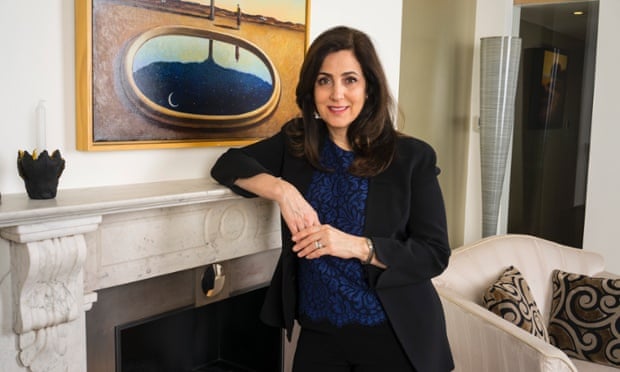
She left Facebook for Tech City and the House of Lords, and serves as adviser to the prime minister charged with helping to grow the UK’s digital economy. So what direction now for the enterprising Baroness Joanna Shields?
Imagine, if you will, the offices of a fashionable digital business. The rows of gleaming Apple computers. The ping pong tables. The brightly coloured designer furniture. Now scrub it from your mind and imagine the total opposite of that, and you may come up with something like the wood-panelled, burgundy-carpeted tearoom at the House of Lords where I end up meeting Joanna Shields.
Because Shields, otherwise known as Baroness Shields of Maida Vale, is the oddest of combinations: a highly successful American businesswoman and a peer of the British realm (she holds dual nationality). She was the European managing director for Google before leaving to go to the early but short-lived social media site Bebo, and from there went on to be Facebook’s MD for Europe, the Middle East and Africa. She was featured in former boss Sheryl Sandberg’s book, Lean In, and then, in an unexpected move, became the CEO (now chair) of Tech City, the government-backed body charged with encouraging growth in the digital economy, a digital adviser to David Cameron, and, in September last year, a Baroness.
Facebook must be one of the most youthful, dynamic places to work in the world. And you left it to join the House of Lords which must be one of the most antiquated. What were you thinking?
It’s been my life’s dream. I won a contest when I was a kid: I wrote an essay and won a trip to Washington. I always wanted to be in government.
But aren’t you in the wrong government, according to that dream?
No, actually not because I’m also British. I’m a dual citizen. I’ve been living here for 15 years. It’s my home. London is the greatest city in the world, by far. It’s this gateway to the world. I came here as a business person, and you could live in London and wake up and do work in Asia, and then by the time you finish your day, you’re talking to California. And I love the arts, I love theatre. I love the museums. It’s just a remarkable city.
When did you decide to become a British citizen?
In 2008. I knew I wasn’t going back, I wanted to stay. I was one of the first people to do the citizenship test. I’m one of those people who don’t want to get anything wrong, so I stayed up all night obsessed, studying. And I remember turning it in and saying to this Russian girl who was there, “How did you do?” And she goes, “I think I aced it.” And I said, “Yeah, me too.” And then the guy in the back said, “You both did. Neither one of you missed anything.” It was quite funny.
Have you ever come second at anything?
Of course. I don’t like to lose, though. Who does? But back to your question about the House of Lords, it’s just a real privilege to be here with these people who have all this amazing life experience.
Is that a polite way of saying they’re quite old?
No, not at all. And you know, I’ll be 52, I’m not the youngest. People take it very seriously. They work really hard.
So, when you explain about the House of Lords to your friends back in America, and say there are these hereditary peers who are basically born to rule, how does that go down?
Americans love history, and they love traditions. They think it’s kind of cool.
FacebookTwitterPinterest
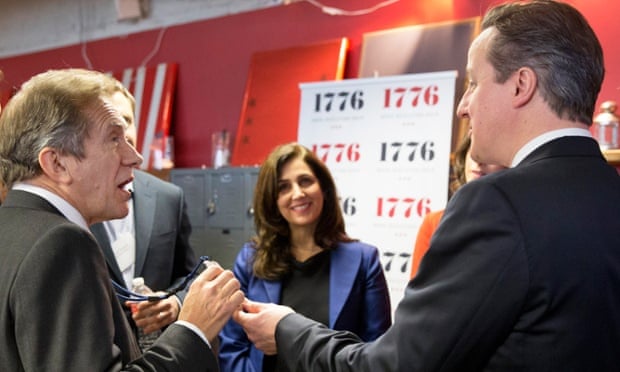
Joanna Shields with David Cameron and Richard Parris of hi-tech security card company Intercede, at a reception for startups in Washington.Photograph: Jacquelyn Martin/AP
If the Conservatives win the election, would being a minister in the new government be something that interested you?
I have not been asked. It’s too early for that. I want to work hard and do as much as I can. Digital is so important to everything. I love that I can bring that to the table when it matters. I’m sorry I’m so optimistic, but I’m a really optimistic person.
Tech City launched something called Tech Nation this week. Can you explain what that is?
We looked at all sorts of data sources, from government and so on, and have done a complete state-of-the-tech-industry report for the UK.
And what headlines have come out of that?
The cool thing is that when I joined Tech City as CEO and chair two and a half years ago, it was very clear that what we were doing for east London – in terms of supporting entrepreneurship and coming up with policies that enabled companies to thrive and grow – we needed to do for the whole country. So at that point, Tech City became Tech City UK. We started creating national programmes to support growth.
Doesn’t the name Tech City, though, mislead people? Tech City, in most people’s minds, is in east London.
That’s just one initiative, but it turns out every city has a thriving tech industry. There are 21 clusters that we profiled, all in their own right really strong digital clusters. Tech and digital business is the fastest growing sector of the economy – and 74% of those businesses are located outside of London.
Is this the normal thing whereby London gets all the attention at the expense of the rest of the country?
Well, that’s what we’re trying to do: shine the spotlight on the whole country. It took us a year. It’s been a long project. We’re a very tiny team.
The big giant Tech City is manned by just 12 people?
This is one of the criticisms that was levelled at Tech City, certainly in the early days, that it was just a marketing gimmick and an example of politicians jumping on a bandwagon. There was a startup cluster in Silicon Roundabout and Tech City was created as a means of trying to grab the glory for political ends. That’s kind of unfortunate, because really what was happening was that at the height of the recession these green shoots were spotted in east London and it was a case of saying, let’s look at it, figure out what’s going on, and see how we can support it. And this was very smart, you can’t deny it. A report from Boston Consulting Group said that our internet economy is 12.4% of our GDP and that there are 1.46 million people employed in the tech sector, and these are mostly new jobs. It’s huge.
You’re now Baroness of Maida Vale but you were brought up in a small industrial town in Pennsylvania, one of five children. You sound like the heroine of a Bruce Springsteen song.
Oh, Bruce Springsteen was big where I grew up. He was the Boss. I know every word to every song he ever wrote.
What do your family make of your success?
My parents came to my introduction here at the House of Lords. My family are all entrepreneurs. They all own small businesses. They all have this thing of don’t take yourself too seriously.
FacebookTwitterPinterest
Baroness Shields: ‘I grew up different. I didn’t quite fit.’
You wrote a very moving article last year about your experience of being bullied as a teenager…
Yeah, I had a rough time. I grew up different. I was always slightly sticking out. I didn’t quite fit. I always wanted to travel and see the world, I had all these ideas… I was a little quirky. I probably drew attention to myself. I had a really hard time. I didn’t go to school for a year. I had physical abuse, mental abuse… it was horrendous.
Does that still inform you now?
Absolutely. Over the years it made me choose friendships wisely and really carefully. I remember sitting in a group of girls at university and being quite emotional because I was laughing for the first time. I was actually enjoying myself. That was quite hard. But now those two girls, they’re the best friends on earth. So, from that really dark place I found great friendships.
Business can’t be an easy place to be if your feelings get hurt and you don’t like bullying cultures. What drove you towards it?
I was interested in technology originally. Business was kind of an afterthought. It was more about building products to me.
Do you get fed up being asked about being a woman in business? Or, do you think it’s necessary to cheerlead for the next generation?
I feel a certain responsibility. I think it was Jack Lemmon who said, “If you make it, you have to send the elevator back down.”
You took only five days’ maternity leave when you had your son. Is that an example of the hard choices women have to make to have your sort of career?
That was really hard. But I was chief executive of a company, we had just raised some money, and the board was like, “You’re having a baby?” They took a chance on me, and I wanted to make sure that I didn’t let them down.
You come across as very unmacho. Has being a woman helped your career in any way? You’re very different to most men in corporate life.
I think a woman at the top of her game is the best. Women in general have more EQ [emotional intelligence], they understand the family balance, can tell when someone needs a break – we get it. I think in some sense that’s an advantage, but it is hard to be the only woman in a room sometimes. But technology is becoming more interesting and more appealing to women.
But now you’ve entered a profession that has even fewer women in it.
I don’t know – I was looking around in a meeting today thinking, Wow, there are some powerful women here. In cabinet there’s Nicky Morgan, Justine Greening , Elizabeth Truss and Theresa May – oh my gosh, she’s amazing
Facebook paid something like £200,000 in tax on more than £200m profit in Britain when you were in charge. Now you’ve entered politics, now you’ve seen that taxes are really necessary in terms of running the country, has your view of this changed?
First of all, I pay all taxes in both countries. I personally always pay my tax.
Doesn’t that make it more annoying then that companies don’t?
Every US technology company has deployed the same tactic for internationalisation for the past 30 years. But it’s changing. Everybody has complained about it, but this government has changed it. When we had the stewardship over the G8, we talked about tax and transparency. The OECD started this process, and it changed.
So, tell me, your previous boss was Mark Zuckerberg and now it’s David Cameron… any similarities?
They both work incredibly hard, they’re both incredibly passionate about what they do.
They’re both good at chillaxing? That’s what David Cameron once said.
I just see them as two incredibly dedicated people. Mark was amazing to work for – such a visionary and such immense talent. A very quiet leader. Both of them are quiet leaders. Quiet, determined, thoughtful leaders.
It’s getting harder and harder, but I’m determined to keep afloat – the shows we watch and the celebrities that obsess us speak volumes about society’s values and assumptions
Should The Imitation Game have won a Bafta? I don’t know. The question alone is enough to send me into a spiral of anxiety. Was Katie Price a worthy Celebrity Big Brother winner? Pass. And no, I don’t have an opinion on Madonna’s Snapchat-released tunes.
The truth is, I haven’t seen or heard any of these things, just as I haven’t consumed most of last year’s social media memes, anything on Instagram and most of this year’s exciting new books or plays. I may grin and nod when you mention them, but chances are they have passed me by.
Of course, it would be easy to shrug and say not keeping up with the Kardashians is part of growing up. Maybe I’m just too old. So much pop culture is youth culture, and it’s easy to let The Hunger Games or Zoella pass you by with a cynical shrug. Yet some people manage it: I recently found out my great aunt is on Snapchat. Worse, last week she posted a funny parody of a music video on her Facebook page before I’d even heard of the singer in question.
Besides, if you are going to pretend you are above mass entertainment, you need something else to show for it. And it’s not as though I’ve kicked a Celebrity Big Brother habit for evenings in with the great Russian novels. This was brought home to me at a family party last week. I could only faintly mouth, “Oh yes, I read that – that was good,” while my aunt raved about the Rubens exhibition and Dara, the first original Pakistani production to be adapted by the National Theatre.
I think I am suffering from a mild form of chronophobia: fear that time is moving so fast I’ll never be able to catch up. When it comes to the tide of culture, I am not waving but drowning. And I can pinpoint the moment this started: 18 months ago, when my daughter was born. Suddenly my free time was slashed, and more often than not I chose to spend it staring into space contemplating my exhaustion. All the same, I never expected that, having dropped out, tuning in again would be so hard.
In my defence, it seems clear that pop culture now moves more quickly than ever before. No sooner has there been a Twitterstorm than there is a backlash; if you blinked and missed the original story, none of it makes sense. I still don’t really understand who Alex from Target is, or why a baked Alaska caused such a meltdown on The Great British Bake Off.
Our cultural life is also more fragmented. TV shows now come from all around the world. Comic-book geeks and cutting-edge music aficionados crowd my Twitter timeline with their Mastermind-style knowledge. I can’t keep up. Steven Johnson, author of Everything Bad Is Good For You, claims pop culture is becoming more complex and intellectually demanding than ever before. (I’d tell you more, but I haven’t got round to finishing his book).
For those of us desperately trying to #stayrelevant, there are apps that tell us exactly which cultural events we are missing. The old fear that others have a better social life than I do has turned into anxiety that everyone is more up to date than me. Am I the only one who feels like the high court judge who had to have the Beatles explained to him?
It’s tempting to just give up. I wonder whether this is behind the current trend for “digital detoxes”. Is switching off your electronic devices a way of ensuring you don’t lose face if flummoxed by talk of Michelle Obama’s Saudi style choices, or Harry Styles’s latest squeeze: a new version of smugly proclaiming you don’t own a TV?
For me, the best reason not to throw in the towel is that pop culture mirrors our society’s values and assumptions just as much as art does, and it’s very timeliness is why it matters. Losing track of it feels like retreating from the bigger conversation about what we think is important, and why. Which is why I will struggle in the face of my chronophobia, and finally find out why everyone tells me I’d Better Call Saul.
By watching the death of Moaz al-Kasasbeh online, we are in danger of normalising such brutal deaths
It has been quite a while since any respectable Briton presented, as Piers Morgan has just done, the viewing of a public execution as a worthwhile moral experience. Of course, Morgan does not, like predecessor enthusiasts of the 18th century, approve of the penalty itself or believe in execution-viewing as a deterrent ritual intended to strike awe and fear into watching crowds.
In practice, contemporaneous descriptions of the Georgian mobs who followed prisoners to the gallows at Tyburn record “an indecent levity” that would probably not look out of place – minus beer and visible women – at festivities staged by Isis in Raqqa. After photographs of First Lt Moaz al-Kasasbeh’s face as he waited to die, the next most disturbing, ineradicable, image of last week, was surely the excited face of a small boy at an Isis screening who was loving every minute of the immolation.
Mr Morgan believes readers will share his response. “If any Muslim remains in any doubt,” he writes, “as to whether this is the right time to stand up and cry, ‘Not in my name or my Religion!’, then I suggest they too watch the video of Lieutenant al-Kasasbeh being burned alive. He could be YOU.” Evidently he does share the official conviction, prevalent before British executions became private events, that, correctly staged, the spectacle of death has a sufficiently instructive impact to justify the voyeurism, the theft of the dying man’s dignity – and, nowadays, the inevitable subscription, by those who urge viewing of the videos, to the aesthetics of their producers.
It appears to be precisely because Isis came up with this new variation, a burning, that Morgan responded and then found himself reacting so passionately to the real thing. “I’m actually glad I watched it,” he writes, for all the world as if he were a newcomer to Isis atrocities. “Glad I know they have no limits, no humanity, no semblance of any kind of soul.”
His endorsement will have helped the snuff movie, now embedded in Fox New’s coverage, to become yet more ubiquitous online. “After careful consideration,” said Fox’s executive editor, John Moody, “we decided that giving readers of FoxNews.com the option to see for themselves the barbarity of Isis outweighed the legitimate concerns about the graphic nature of the video.” There could hardly be a clearer hint to Isis after this hit to come up with something even better next time, so that none of us suspects there might be limits to their creativity. Even now, they are probably studying the chapter in Steven Pinker’s The Better Angels of Our Nature, where the great optimist describes some of the hideous tortures that moral progress has left behind.
In 1783, London’s Morning Daily Advertiser said that “the lower orders of people habituated to the almost daily return of sanguinary spectacle will, by degrees, lose all feelings...” We need have no such worries for Fox News executives, of course, sensitively establishing that this footage must be readily – unlike the Charlie Hebdo cartoons – clickable, or for Mr Morgan, who reported himself, after watching it, stirred to “feel such uncontrollable rage that no amount of reasonable argument will ever temper it”. Supposing uncontrollable and unreasoning rage were either at a shortage or a promising response to terrorism in Syria (including our homegrown contribution), this would be quite a challenge to anyone who feels, as reformers once did, that an imagined death penalty might have as much impact as a witnessed one, at the same time that it gives Isis less purchase on the brain. Or whatever you call the psychological legacy of watching individuals being decapitated or burned to death.
Even if you don’t believe that viewing Isis’s executions is, as some allege, tantamount to complicity, the normalisation of these spectacles might seem a high price to pay for a surge of impotent rage. Indeed, that anyone would declare themselves actively “glad” to have watched a man’s death throes, as opposed to, say, better informed or permanently scarred – whatever might constitute an adequate reaction – surely suggests, as well as a worrying susceptibility to murder-novelty, that freedom of expression is not the only local value to have been significantly eroded by Isis-inspired brutality.
Not long ago, after all, the taboo about watching any deaths at all was such that the public agonised about whether it was acceptable to spectate, with consent, at an assisted suicide in a moving documentary by Terry Pratchett.
As for watching sadistic rituals, for pleasure or edification, the last public execution in this country, was of the Fenian, Michael Barrett, in 1868, more than two decades after Charles Dickens began campaigning against capital punishment. Of one execution, he wrote in the Daily News: “I did not see one token in all the immense crowd; at the windows, in the streets, on the house-tops, anywhere; of any one emotion suitable to the occasion.”
Thackeray described the same execution in Going to See a Man Hanged , in which he admitted, unlike our sturdier contemporaries, to being unequal to watching the final moments of a convicted murderer. “I must confess,” he wrote, “that the sight has left on my mind an extraordinary feeling of terror and shame. It seems to me that I have been abetting an act of frightful wickedness and violence, performed by a set of men against one of their fellows; and I pray God that it may soon be out of the power of any man in England to witness such a hideous and degrading sight.”
Maybe the absence of a party atmosphere, outside Isis territory, so that people generally watch these horrors in private, like pornography, not in real time, without cheering – but with snacks – makes the renewed acceptability of this activity marginally less dismaying. On the other hand, it took some effort to secure a good view of a big Victorian execution and none whatsoever to shun it.
The swift penetration of the burning video throughout social media to the point that links became unavoidable, along with beckoning stills (as on BuzzFeed, or the Daily Mail’s display of flames, adjacent to its celebrity sidebar), can’t but shake one’s faith in the internet as a supremely benevolent contributor to what Pinker calls “the long peace”. Then again, as the professor writes in his Two-Minute Case for Optimism, which has saved so many Chipotle customers from despair since appearing on its take-out bags, one should always put these discouraging developments in perspective.
Yes, to be pessimistic, in the short time since Ofcom received 700 complaints about broadcast footage of Fusilier Lee Rigby’s assassination, the viewing of brutal murders seems to have become barely more controversial than watching Broadchurch, and a lot more popular. But – optimistic hat on – ask yourself, to quote Pinker’s Chipotle bag, how many incidents of violence are there as a proportion of the number of people in the world? “Measuring the progress we’ve made in the past emboldens us to strive for more in the future.” Imagine you live in London 1868 and it makes perfect sense.
After attracting more than 50m monthly readers on tablets and smartphones, US startup smashes down its walled garden and hopes partners will see the potential
Flipboard came to prominence as a news-reading app for tablets and smartphones, attracting more than 50 million monthly active readers by the end of 2014.
Now it’s launching a fully-fledged website version where people will be able to browse their feeds of news and social updates. What’s more, Flipboard will also be hosting some publishers’ articles and splitting the advertising revenues with them.
“We’re moving Flipboard to the web. A lot of people think of Flipboard as an app, but Flipboard is really an overall service: a curation network that people are using to follow their interests, and curate their interests,” says chief executive Mike McCue, during a pre-launch demo of the new site.
“We want to make Flipboard more universally acceptable to people by moving it to the web. And also to help people who have gone through the process of personalising their Flipboard to take advantage of that when sitting at their desktop.”
The new website is a big move for Flipboard: besides giving its users another way to read, it also smashes down the walled garden around its apps, and makes the service part of the open web.
That’s particularly important for two Flipboard features in particular: “magazines”, which were introduced to its apps in March 2013, and “topics”, which launched in October 2014.
The first enables Flipboard users to curate their own digital magazines on any themes they like, with other users able to follow them. More than 15m of them have been created. Topics, meanwhile, enables people to follow feeds of articles about tens of thousands of subjects: from food and football to beekeeping, virtual reality or Taylor Swift.
Related: Flipboard 2.0 looks to make everyone the editor of their own magazine
Flipboard is taking all these magazines and topics from its closed apps to the open web: whether curated by humans or algorithms, its collections of articles will be findable within search engines and much more shareable on social networks. As examples, here are the magazines I created for drones, 3D printing and virtual reality to test the new features.
In short, as a website with a deep, long tail of magazines and topics, Flipboard could now be attracting a lot more viewers, showing a lot more ads to those people, and thus making a lot more money.
Yet this content will also now be more obviously in direct competition with the websites of the news publishers whose stories are shared (or “flipped”) on Flipboard. Which is one reason why the company wants to persuade more of those publishers to let Flipboard host their content, rather than just linking to it.
Also key to that is the slick nature of Flipboard’s new website, which swaps the page-flipping interface of the app for a vertical feed of stories for users to scroll through, with images to the fore.
‘This is something art directors do...’
Editorial purists look away now: McCue says Flipboard’s new site is doing the job of an art director from a traditional print magazine in the way it matches text-box colours to their accompanying images, and in its placement of headlines within large photos to ensure they don’t obscure key details.
“This is something art directors do on a regular basis in print. We’re doing it through an algorithm, and it works really, really well. We’ve created some really great technology in terms of how to integrate different colours, type sizes and fonts to make it feel more magazine-like.”
One thing missing from the demo was advertising, but ads will certainly be a presence on Flipboard’s new website, as they are within its apps.
“Advertising will play a role here, just like it does on Flipboard, but they will continue to be beautiful magazine-like ads that feel like a natural part of the experience – like full-page ads you find in a magazine,” says McCue.
Irked art directors aside, what will news publishers make of Flipboard’s new site? Since its launch, Flipboard has divided opinion within the publishing industry between people who embrace its aggregation model, and people who distrust it.
In fact, sometimes it’s divided opinion within media companies, for example when The Economist’s digital team struck a distribution deal with Flipboard shortly before the company’s chief executive criticised it as “a head-on competitor” and “problematic”.
FacebookTwitterPinterest
Flipboard’s magazines will be part of its new website.
The New York Times, the Wall Street Journal, CNN, Lonely Planet and (disclosure) the Guardian are among the publishers that have partnered with Flipboard, including experimenting with reformatting their articles and sharing ad revenues.
“Our strategy from the very beginning has been to do all of this in partnership with publishers: to enable them to create content and have that content find its maximum audience around the world,” says McCue.
“We want to be a distribution vehicle for our publishing partners, and make their content look and feel great, and load really fast, particularly on mobile devices. We do a lot of reformatting of content with our publishers’ help, and we’re able to sell these beautiful magazine-like ads. They make a lot more from those ads than from banner ads.”
It’s a valid question to wonder whether some of those publishers who’ve partnered with Flipboard felt comfortable doing so because it was an app – a separate digital space on tablets and smartphones – rather than another website.
There’s a view that the fragmentation (or disaggregation) of news publishing is inevitable, and that publishers should be biting the hand off clever technology companies willing to share the profits from aggregating their stories in a way that benefits readers.
The opposing view – this piece on Talking Points Memo sums it up – holds that companies like Flipboard are bad for publishers: parasitical businesses whose promises of eyeballs and exposure mask a business model that will ultimately only pay off for the aggregator.
Related: Flipboard reaches $800m valuation after new investment
In truth, most news publishers sit somewhere in the middle, and their experiments with Flipboard and similar services are steps towards understanding which of the above theories holds more water. Flipboard’s new website may sharpen their thinking on this score.
“We are sensitive to making sure that we do this in a way that publishers are happy and excited about,” says McCue, showing how in most cases, clicking on an article on the new website will take users to the original story. “We’re just driving traffic to their websites.”
There’s a but.
“But we do think there’s a path forward that could lead to more beautiful content presentation, that’s faster and generates more revenue for the publishers. We’re experimenting with a few publishers where we’ll render their content on the web too,” says McCue.
‘We’re experimenting with a few publishers...’
He shows a demonstration: a National Geographic article about Mexican mangroves with a fast-loading gallery of photographs.
“For something like National Geographic, on the web we’re going to render their content for them in some ways they weren’t able to do before. We think we can improve the state of the art of what’s happening on the web,” he says.
“It loads faster, it looks beautiful, and they could have beautiful full-page ads in here that are way more successful at monetising than a banner ad. So we are experimenting with publishers to enable them to have a better experience.”
If the pitch sounds familiar, it may be because of an article in October 2014 by New York Times media critic David Carr, in which he broke news of Facebook’s negotiations with publishers to host their content – albeit for mobile rather than desktop-web reading.
“One possibility it mentioned was for publishers to simply send pages to Facebook that would live inside the social network’s mobile app and be hosted by its servers; that way, they would load quickly with ads that Facebook sells. The revenue would be shared.
That kind of wholesale transfer of content sends a cold, dark chill down the collective spine of publishers, both traditional and digital insurgents alike. If Facebook’s mobile app hosted publishers’ pages, the relationship with customers, most of the data about what they did and the reading experience would all belong to the platform. Media companies would essentially be serfs in a kingdom that Facebook owns.”
Flipboard is nowhere near the 900lb gorilla status of Facebook in this regard, but nevertheless it, too, is angling to host publishers’ content and do a better job than they can – art editors included – of making it look nice, load quickly and make money from ads.
“Really what we’re trying to do is set it up so that people can focus on the content creation and the quality of the content. We can then help with the distribution of that to its maximum audience, help them make it look beautiful on web, phone or tablet, and we can help monetise it at a level that’s much higher, so that it continues to support that content creation,” is the way McCue puts it.
What about funding it themselves? Now that Flipboard has a platform spanning mobile, tablet and the web, as well as the capability to host articles and sell advertising around them, why not take the next step and hire a few journalists, photographers and videographers to produce original content?
Blogging platform Medium is one example of a company moving from a platform to a publisher, with its “verticals” like CuePoint (for music) and Backchannel (for tech). Could Flipboard follow suit?
“We will see how that all plays out,” says McCue. “You could see us partnering with Medium or other original content-authoring tools, and we might do some things that will enable our curators to create more of these magazines. But right now, our focus is on the packaging of this content.”
Addition to Knowledge Graph will present medical facts for searches on health conditions, verified by the Mayo Clinic
Google is changing the way it displays search queries to pull medical facts directly into its results.
The medical information is being added to the company’s Knowledge Graph, which underpins Google’s instant search results and powers Google’s Now personal assistant and app. It will allow health questions to be answered directly, without a user having to click.
Google already does this with dictionary definitions, schedules for big sporting events and Wikipedia extracts for famous people. Knowledge Graph is essentially a built-in encyclopaedia, which pulls in facts, data and illustrations from various sources.
One in 20 searches on Google are health-related, according to the company. “We’ll show you typical symptoms and treatments, as well as details on how common the condition is – whether it’s critical, if it’s contagious, what ages it affects, and more,” said Prem Ramaswami, a product manager for Google’s search.
Google’s Knowledge Graph will now present medical information right in the Google search app
The addition of medical information is part of Google’s push into health, which includes the company’s health and fitness data service and apps Google Fit. But while Google’s Knowledge Graph attempts to put useful, relevant information at the top of generic searches, the accuracy of medical information is critical.
Google has partnered with doctors from the non-profit Mayo Clinic to curate and check the relevant facts and health data that has been added to the database for accuracy. On average, each piece of medical information presented by Google will have been checked by over 11 different physicians.
Related: DNA-screening test 23andMe launches in UK after US ban
Medical advice is strictly regulated in the US. The 23andMe genotyping project, part-funded by Google, was ordered to stop giving out health information on genetic diseases by the US Food and Drug Administration in November 2013.
Google will be keen to avoid such action with the new service. Ramaswami said the new search results were not intended as medical advice. “What we present is intended for informational purposes only – and you should always consult a healthcare professional if you have a medical concern,” he added.
The new information will be integrated into Google’s US search and Google apps over the next three days, starting with 400 medical conditions ranging from diabetes to measles, which will represent about 10% of all health searches made via Google. The service will be expanded beyond the US at a later date.
Related: Google and the future of search: Amit Singhal and the Knowledge Graph
Google’s Knowledge Graph has been criticised in the past for encroaching on existing publishers, abusing its market position as the top search provider and pipe to the internet for the majority of the western world.
A sizeable industry has grown up around providing health information online, with sites competing for search traffic with highly tuned articles matched to queries around common illnesses, with the primary focus on driving ad views rather than accuracy.
In the UK, the NHS has tried to combat this trend with its own medical database of facts and health advice for common diseases.
Related: NHS scrambles to fix bug sending users to malware site
Google claims that its health information presented in the new feature is at least accurate and it will not be directly monetised. It is possible Google could partner with the NHS for a launch in the UK at a later date.
Previously president had attacked Twitter saying ‘I don’t like to tweet, schmeet’ and compared social media to a ‘knife in the hand of a murderer’
He has compared social media to the “murderer’s knife”, proudly declared he does not “tweet or schmeet” and overseen blanket bans on Twitter.
But has Turkey’s famously technology-phobic President Recep Tayyip Erdogan finally lost his hostility to Twitter?
Erdogan, currently on an official visit to Colombia, on Monday sent his first ever personal tweet from the account @RT—Erdogan, the presidential administration announced.
Appropriately enough for the Islamic-rooted leader, it was a tweet denouncing smoking on Turkey’s national anti-tobacco day.
“Get a grip of yourself against this poison,” Erdogan wrote, using the hashtag SigarayaTeslimOlma (Don’t give in to cigarettes) and signing off with his initials RTE.
— Recep Tayyip Erdoğan (@RT_Erdogan) February 9, 2015
Bugün 9 Şubat Dünya Sigarayı Bırakma Günü. Bu zehre karşı sen de iradene sahip ol ve #SigarayaTeslimOlma RTE
The account handle had in the past been used by supporters of Erdogan but it has now been taken over by the presidential administration for the president’s tweets. It has already been verified by Twitter as an official account.
“The account in question has just been opened. It’s his excellency’s own account. Tweets from him are signed ‘RTE’,” Mucahit Kucukyilmaz, the head of public communications at the presidential office, told the Anatolia news agency.
He added that official tweets from his staff on the account will be posted without the signature.
“He wanted to make a start on a meaningful day like this,” he added referring to the anti-smoking campaign.
Kucukyilmaz did not say what had prompted apparent change of heart on Twitter by Erdogan, who has dominated Turkey for over a decade first as prime minister and now as president.
Many top Turkish officials already have active accounts, including Prime Minister Ahmet Davutoglu (@Ahmet—Davutoglu).
But Erdogan had until now shown nothing but scorn for the service.
“I have nothing to do with Twitter. I don’t have that much free time anyway. I’m working day and night,” he said in February 2014.
In August 2014 he compared social media to a “knife in the hand of a murderer”, saying “I don’t like to tweet, schmeet.”
His suspicion of social media dates back to the mass protests in June 2013 against his rule, which were largely mobilised by posts on Twitter and Facebook.
The government blocked Twitter and YouTube in March 2014 after they were used to spread a torrent of audio recordings implicating the prime minister and his inner circle in an alleged corruption scandal.
The ban on social media was later overturned by the country’s top constitutional court.
Debate needs to be constructive, says culture and digital economy minister after David Cameron’s controversial comments
David Cameron’s controversial comments on whether the government should “allow” the use of strong encryption technology for anti-surveillance purposes have been defended by Ed Vaizey, the minister for culture and the digital economy.
Vaizey called for technology firms to “meet politicians halfway” on sensitive issues around privacy and internet safety, rather than react furiously with accusations that politicians do not understand the technology.
He said politicians reflect the views of society and to technology companies must listen. “I know that it’s the fashion for politicians to be self-deprecating and say how utterly hopeless we all are, but just as the challenge was not to elect technologically illiterate politicians, the challenge for the tech industry is also to meet politicians halfway. Politicians do reflect the concerns of society as tech becomes ever more prevalent.
“So the prime minister, I think, is entitled to say: ‘We have a very sophisticated technology industry and encryption and so on… on the one hand I want to promote those industries and I want a successful technology economy, but I also have a duty as prime minister to keep our citizens as safe as possible. And we need to meet somewhere in the middle and talk about this’.”
Vaizey was speaking at a Big Digital Debate event in London organised by techUK, Computer Weekly and BCS – The Chartered Institute for IT, which aimed to give the three major parties a platform to set out their approach to digital issues.
Vaizey suggested that the angry response from technology companies to Cameron’s encryption comments was similar to previous rows over the government’s attempts to introduce internet filters to prevent children accessing inappropriate content online. He said: “I don’t think it’s ever helpful when you say ‘Let’s talk about having family-friendly filters’ for everybody to stand up and scream ‘the government is censoring the internet!’.
Related: David Cameron in 'cloud cuckoo land' over encrypted messaging apps ban
“You’ve got to have a grown-up conversation between the technology industry that is rapidly changing the way we lead our lives and go about our business, and the demos – civil society – about the kind of concerns that brings.”
Vaizey later returned to the theme of privacy, claiming that finding a balance between data protection and “snooping” is another area where constructive discussions between politicians and technology firms are needed. “It should be a sophisticated conversation between the technology industry and politicians, who represent the perfectly legitimate concerns of citizens,” said Vaizey.
“When you talk about data, people get nervous. When you talk about how you’re going to use data, people get nervous. But there has to be this conversation about how data is being used.”
Vaizey was joined at the event by Chi Onwurah, shadow minister for digital government, and the Liberal Democrat spokesman Julian Huppert. The latter criticised the implication that politicians and citizens were faced with a “one-dimensional” choice between security and privacy. “If we get it right, we can actually have better privacy and better security. Better business and better data protection. We’re not at the technical limits of what you can have with either of them,” said Huppert.
“And so we can go in the right direction: if we can move away from this idea that it must be one or the other, which I think is one of the reasons why the discussion has been so difficult, because it’s been people pulling apart.”
FacebookTwitterPinterest
Ed Vaizey, Chi Onwurah and Julian Huppert at the Big Digital Debate.Photograph: Stuart Dredge/The Guardian
David Evans, membership director of BCS, was also on the panel, and agreed with Vaizey that the technology industry could be more constructive in its response to these kinds of debates in the political sphere, citing Cameron’s encryption comments as an example.
“The prime minister was saying something about what he wanted out of the tech industry. It is almost … a moot point as to whether that was the right thing or the wrong thing. It is entirely reasonable for politicians to react to what the nation needs,” said Evans.
“Just as we want politicians to become technically competent, we want the tech sector to become politically competent. The answer is not ‘You’re an idiot, shut up’ The answer is: ‘That may not work quite so well as you think, prime minister, but we get what you want to achieve, and here is a better way of doing it.’ And that, for me, is a much more grown-up conversation around these issues.”
Evans also called for stronger leadership from British politicians in grappling with the implications of new technologies, and their implications for citizens’ personal data – citing this week’s reports that Samsung’s connected TV software might capture and transmit “personal or other sensitive information” through its voice recognition features.
Related: UK-US surveillance regime was unlawful ‘for seven years’
He said: “That is in some ways hilarious, and in some ways totally chilling. And as we move in to a more connected world, and the huge proliferation of wearable devices, always-on devices that are going to be processing our information, we simply do not have a good model for how citizens maintain any control.”
The question of more technically-competent politicians came up several times during the debate, with Vaizey, Onwurah and Huppert admitting that a number of their colleagues are far from tech-savvy.
Huppert said: “There is an issue with how technology-illiterate politicians are. I don’t think that applies to any of the three of us, but there are people across the parties who tend to say rather silly things based on not knowing or caring about technological facts.”
He called for technology companies and journalists alike to “put pressure on MPs and candidates from all parties to care about this” in the run-up to this year’s general election, calling for more “selective pressure” to make technological literacy a vote-winning issue.
“People can get elected whether or not they say sensible things on these sorts of issues, and it would be really good to have that pressure so that when somebody says something which is daft, they won’t get votes from a large number of people.”
Digital inclusion may also be a prominent issue in the run-up to the election, with Onwurah accusing the coalition government of letting down communities that don’t have reliable access to the internet and/or the skills to make use of it, from farmers to benefits claimants. She said: “We are still in the position where so many people can’t get online. This government is sanctioning people who can’t sign on online. And their digital inclusion strategy declares that 10% of people will never get online. This is what we want to change: digital inclusion would be a core part of the next Labour government.”
FacebookTwitterPinterest
Chi Onwurah wants more support for startups out of London.Photograph: Stuart Dredge/The Guardian
Onwurah also called for the Government Digital Service initiative to extend from central to local government, to give people more digital access to local services.
“Being able to renew your driving licence online is nice, but the way government will transform the relationship with the citizen – and also save money – is about social care, it’s about benefits, it’s about housing, it’s about looked-after children,” she said.
“There are really important services out there that remain to be addressed, and that can only be done with local government putting people in control of and in ownership of their own data.”
Vaizey warned that digital inclusion has to be about more than “just talking to your grandchildren on Facebook: it’s about access to benefits and crucial government services”, while Huppert called for it to not be pitched as teaching people to use a computer: “It should be ‘We’ll teach you to do the thing you want to do,’” he said.
Britain’s technology industry also came under the spotlight during the debate, including whether the current government’s strategy has been too focused on London’s “tech city” cluster of startups, starving innovative companies elsewhere in the country of attention and funding.
Onwurah praised the tech cluster in her constituency of Newcastle, and called for government to “reduce barriers so there is support for startups outside London”, but Vaizey denied the accusations that the capital was sucking up the limelight and resources for startups. “Tech city is not just about east London,” he said. “It’s a cluster network of about 22 different cities, from Dundee downwards.”
But the conversation turned to a different challenge: turning these startups – wherever they’re based – into larger “scale-ups”.
Related: Ignite flies the flag for first-time founders and startups beyond London
“In London we still have a real gap to the second stage of investment in startups: the mid-cap investment,” said Onwurah, who was backed up by fellow panelist Julian David, chief executive of techUK. “A great deal has been done for startups,” he said. “British-based mid-size companies is the real issue we need to address, as we get these startups to become scale-ups.”
Huppert took a different angle, suggesting that British startups are not encouraged to take enough risks in order to grow larger.
“You also have to get small companies to fail quickly and easily. There is still a problem in this country: we’re not yet good enough at failure,” said Huppert. “We should make it a low-risk environment to try high-risk things, so you can try something, fail then move on to the next thing.”
David Evans, membership director of BCS, suggested that there was a “leadership vacuum” on data protection that the UK is well-placed to fill, sitting as it does between Europe and the US.
Viewers who pledge £500 will be offered the chance to sing on the theme tune, while £1,000 gets them a walk-on part in Storyline
A group of soap opera veterans are appealing to viewers to fund a new show set behind the scenes of a fictional drama – and are offering the incentive of getting a part in the programme if the pledge is large enough.
Former Hollyoaks star Terri Dwyer, who played Ruth Osborne; Jane Gurnett, who starred as Crossroads owner Kate Russell; and Mark Homer, who played EastEnder Tony Hills, have signed up to appear in the show called Storyline.
Its writer, Neil Anthony Docking, and director, Maxine Evans, are using the fundraising website Kickstarter to try to get £10,000 to make three episodes to be shown for free online in the hope the show gets picked up.
The show is set behind the scenes of a “long-running radio drama” about life in a smart block of flats in London.
Viewers who pledge £500 will be offered the chance to sing on the theme tune, while £1,000 gets them a walk-on part.
Docking, who has worked on Emmerdale and Casualty, said it was “an ambitious project”.
He said: “We’re aiming high. We want to vie with our favourite comedies and attempt to make something as good, as clever, as daft, as funny as the best of them.
“And, at the same time, make our mark with something a little bit different, a little bit original.”
• To contact the MediaGuardian news desk email editor@mediaguardian.co.uk or phone 020 3353 3857. For all other inquiries please call the main Guardian switchboard on 020 3353 2000. If you are writing a comment for publication, please mark clearly “for publication”.
• To get the latest media news to your desktop or mobile, follow MediaGuardian onTwitter and Facebook.
Streaming company among first to offer TV and film content but internet infrastructure and low salaries could make it available only to ‘elite’ consumers
Netflix has become one of the first companies to enter Cuba’s nascent digital entertainment industry, although few consumers are likely to immediately enjoy the benefits. There are only 5,300 broadband internet accounts on the Caribbean island, where low wages mean Netflix’s streaming of television and film content will cost almost half of an average Cuban’s monthly wage.
“We are delighted to finally be able to offer Netflix to the people of Cuba, connecting them with stories they will love from all over the world,” said Netflix chief executive Reed Hastings in a statement on Monday. “Cuba has great film-makers and a robust arts culture and one day we hope to be able to bring their work to our global audience of over 57 million members.”
Netflix, which is based in Los Gatos, California, launched a $7.99 per month streaming service for Cuba on Monday. According to the most recent data released by the National Statistics and Information Bureau, the average Cuban’s monthly wage is $17.
“This announcement from Netflix is very symbolic,” said Sanja Kelly, project director for the Freedom on the Net campaign run by the internet watchdog Freedom House. “It’s not going to change much in the short term.”
Related: Cuba's 'offline internet': no access, no power, no problem
Cuba’s internet infrastructure will almost certainly complicate its citizens’ ability to stream TV and movies.
According to Freedom House, Cuba’s internet has “exceptionally slow connectivity”. Availability is sparse and prices are high. Internet penetration is estimated at about 2.8 million, or about 26% of the country’s population of 11.3 million.
Computers are expensive. A modest computer with a monitor costs $722 in Cuban stores, and at least $550 on the black market, Freedom House reports. About 31% of Cubans have access to a computer at home, work or school.
For those who have internet access, it is tightly regulated and expensive.
“We are not in contact with the Cuban government on content,” said Netflix spokeswoman Kari Perez. The company declined to comment on how many users it expects and on the island nation’shuman rights record. “As we do globally, what content we show depends on our licensing rights. The announcement shows our confidence in the reforms underway in Cuba and that loosened restrictions on US businesses will lead to investments in the country, including infrastructure improvement.”
Although the Cuban government completed a high-speed, undersea internet cable in 2013, Kelly said the line had not yet been brought to full capacity. The country is years away from the standard of internet service enjoyed by Americans.
“Despite this one cable that currently exists, Cuba is still behind,” Kelly said. “We are talking about another five years, if not even more, of additional building up the infrastructure before Cubans are given more basic access.”
The country has 5,300 broadband internet accounts today, according to Kelly.
“Even an internet connection in a hotel costs between $6 [to] $12 per hour,” Freedom House reports. “According to Cuba’s official newspaper, Gaceta Oficial, members of the public are now able to access national websites for $0.60 per hour and international sites for $4.50 per hour – a significant reduction from the previous rate of $6 per hour.”
To further complicate matters, Cubans would need access to an international payment method to buy the Netflix service – credit and debit cards are not widely available on the island.
“We are talking about the elite of the elite,” said Kelly of those Cubans who might access the service. “They would be the ones with international accounts.”
It is unclear if or how Netflix might be subject to censorship by the Cuban government, which closely monitors the country’s internet. The company said it would offer “a wide range of films, series and kids programming, as it does throughout Latin America”.
A press release highlighted offerings such as the original series House of Cards, Orange is the New Black and Marco Polo.
In December, Barack Obama announced a thaw in diplomatic relations with Cuba, overhauling travel, commerce and diplomacy. Some of the changes in US policy are expected to result in more internet infrastructure, as the thaw would allow telecoms companies to expand on the island.
• This story was amended on 9 February to correct the number of broadband accounts in Cuba. There are 5,300.